
Campus Vendor
A two-sided digital marketplace designed to centralise and professionalise the fragmented student marketplace, transforming chaotic service discovery into a structured, efficient, and trustworthy experience.
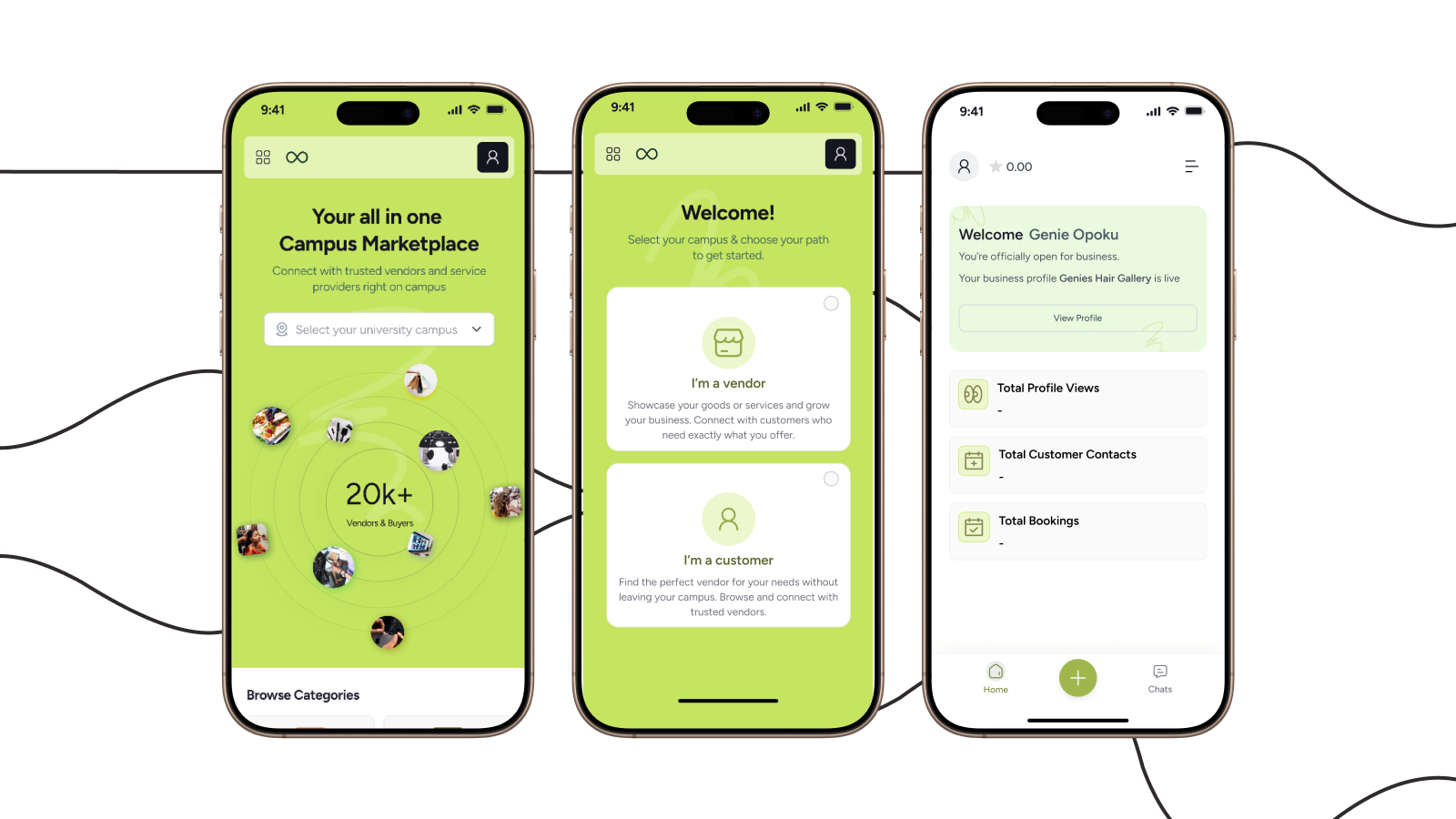
Product Summary
This case study details the design of Campus Vendor, a two-sided digital marketplace designed to centralise and professionalise the fragmented student marketplace. The initiative focused on transforming the chaotic process of service discovery on university campuses into a structured, efficient, and trustworthy experience.
The core solution centred on three things: enabling immediate student discovery through location-first filtering, professionalizing the seller experience with multi-business account support, and establishing trust through dedicated vendor storefronts and clear package pricing. This was a ground-up product design initiative for a new niche marketplace, completed in 5 weeks.
Understanding the “Why”
To understand why the current solutions were messy and cumbersome, I bypassed standard surveys and conducted deep-dive interviews with power users both vendors and customers.
The research revealed a critical Discovery-Intent Mismatch. Social media platforms are engineered for entertainment and doom-scrolling, yet students use them for high-utility searching. When a student needs a tutor now, the friction of scrolling past memes to find a service provider is almost impossible. I needed to build a system that bridged the gap between the immediacy of a search engine and the trust of a verified community.
The Architecture
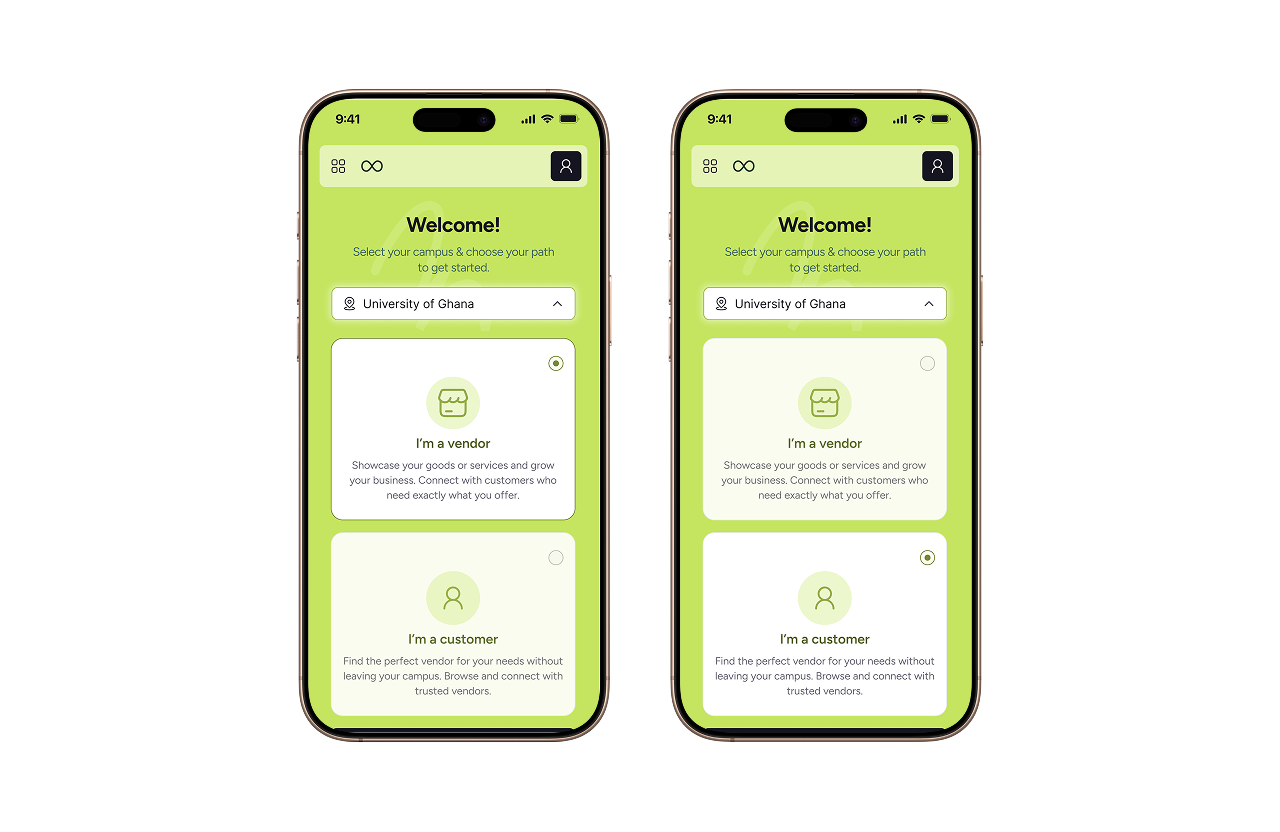
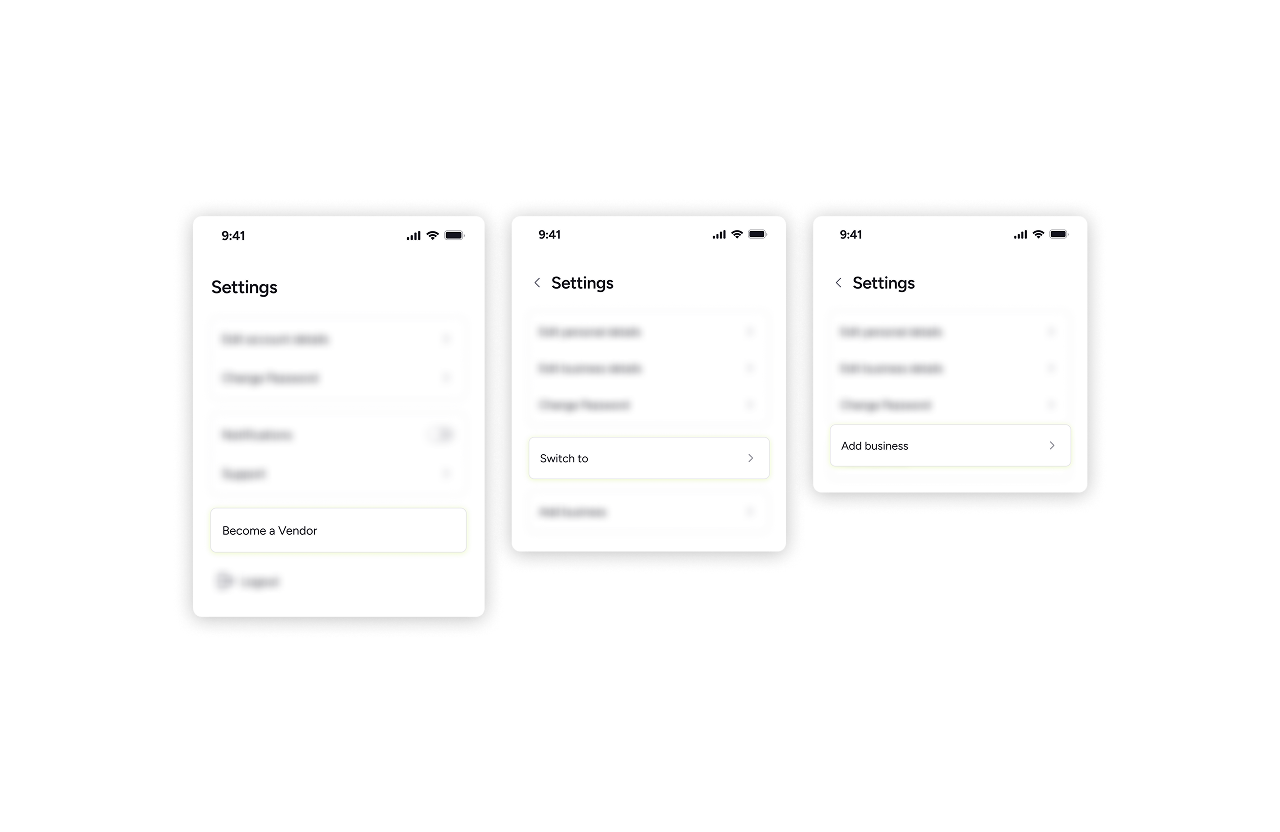
Midway through the information architecture phase, I identified a critical need for context separation within a single user identity. A student uses the platform in two distinct modes: as a professional Vendor managing their business, and as a regular Customer searching for services. Forcing them to manage two separate accounts for these roles would introduce massive login friction and platform abandonment.
I architected the system around a single login that supports two primary User Contexts. The technical challenge was ensuring the system recognised the user’s intent. When the user is in Vendor Context, the dashboard displays analytics, listings, and chat leads. When they switch to Customer Context, the interface instantly transforms into the marketplace search engine. This design decision simplifies the authentication layer while providing two fundamentally different user experiences based on a single click.
Architecture
Architecture-2
Centralizing the Storefront
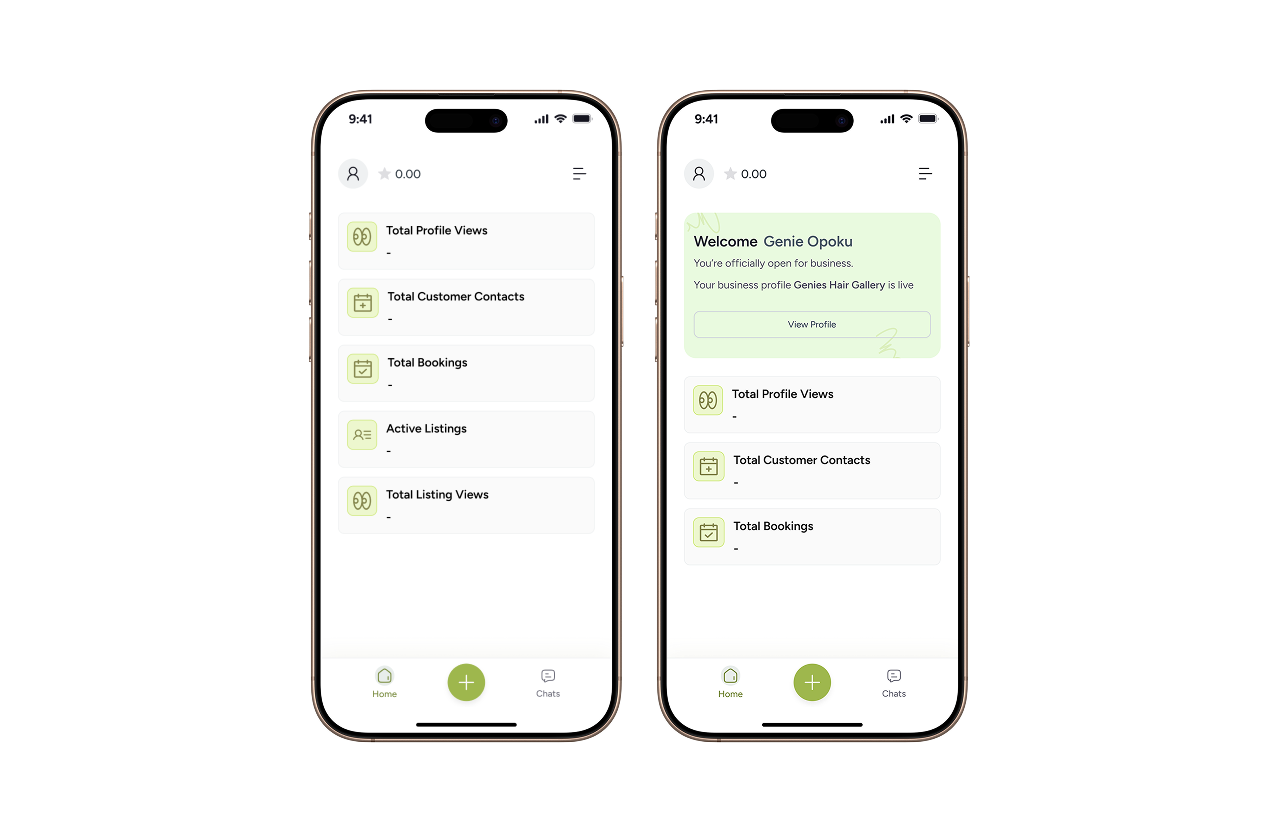
With the data model confirmed, i.e one business, many listings the next challenge was providing a professional-grade storefront that made the vendor feel empowered. The dashboard could not simply be a list of posts; it had to be a “Business Command Center”.
Storefront
The Engineering of Trust
Trust is the currency of a peer-to-peer marketplace. I designed the vendor profile to function as a Digital Storefront rather than a social bio. I implemented a structured Service Architecture that supports complex pricing models. Recognising that a lash tech charges differently than a graphic designer, I created a conditional input system allowing vendors to display Fixed Prices, Hourly Rates, Package Deals and Ranges. On the front, these display as clean, expandable accordions. This transparency eliminates the awkward “DM for price” negotiation loop, establishes immediate cost expectations, and professionalizes the vendor’s offering before a single message is exchanged.
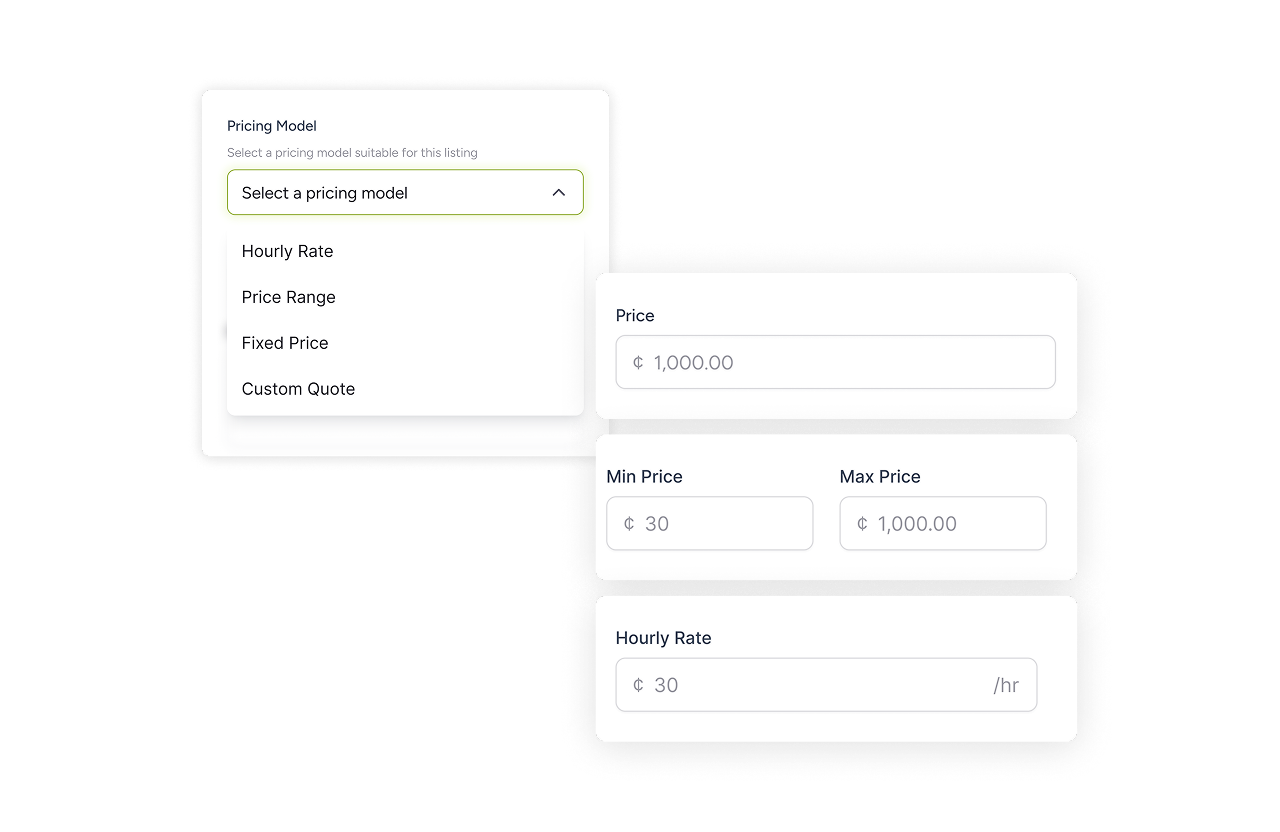
Engineering of trust
The Search Experience
For the buyer, success is measured in “Time to Connection”. I stripped away the concept of a “feed” entirely, replacing it with a faceted search engine powered by hyper-local logic. The filtering system prioritises location immediate availability as well as pricing. A student can filter for vendors who are not just “on campus” but specifically “Near me” and “available”. This granular filtering respects the time constraints of the student persona, turning a 20-minute scroll session into a 30-second booking decision.
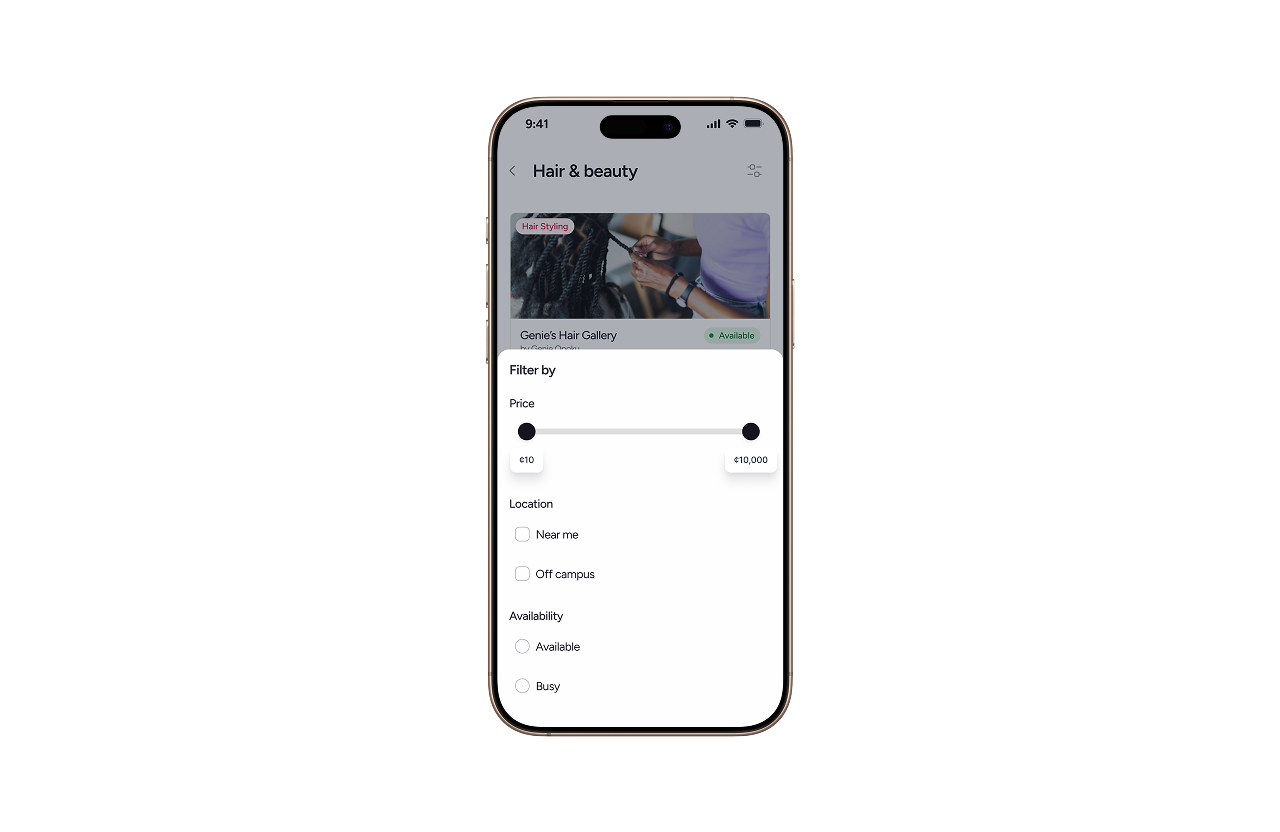
Search experience
The Trust Framework
The major friction point was risk associated with unverified peer-to-peer transactions. We tackled this by designing transparency into every listing card and profile:
Social proof at a glance: Every vendor card displays the vendor’s average star rating. A customer can vet the vendor before even tapping the listing. By forcing vendors to structure their services using the fixed/hourly/range models, the buyer sees clear pricing of products and services.
The storefront vetting: The profile acts as a resume. It features a curated portfolio grid (for images of past work) or products in stock and a mandatory service bio. This structured content assures the customer that they are dealing with a professional, not a hobbyist.
This intentional design choice moves the platform beyond a simple classified app to a functional directory, giving the customer the confidence they need to initiate contact.
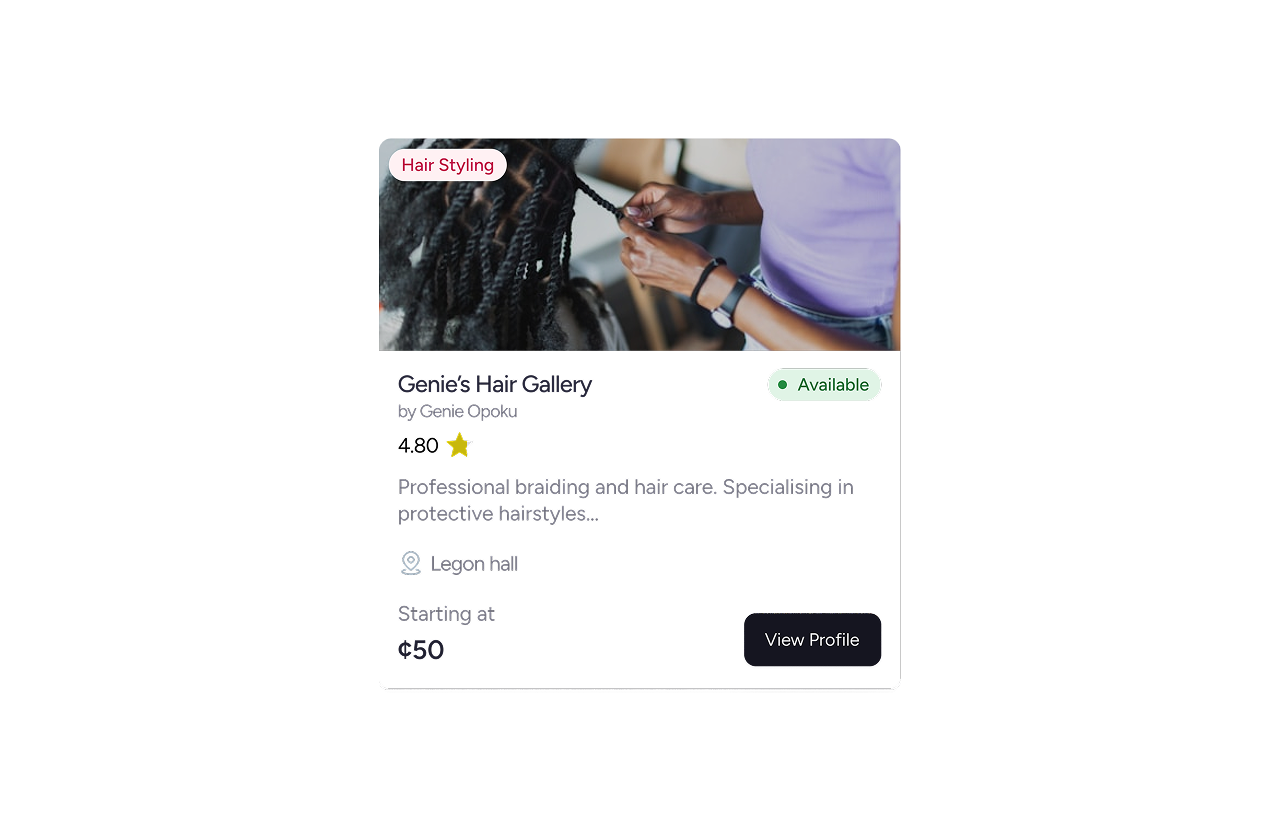
Social proof
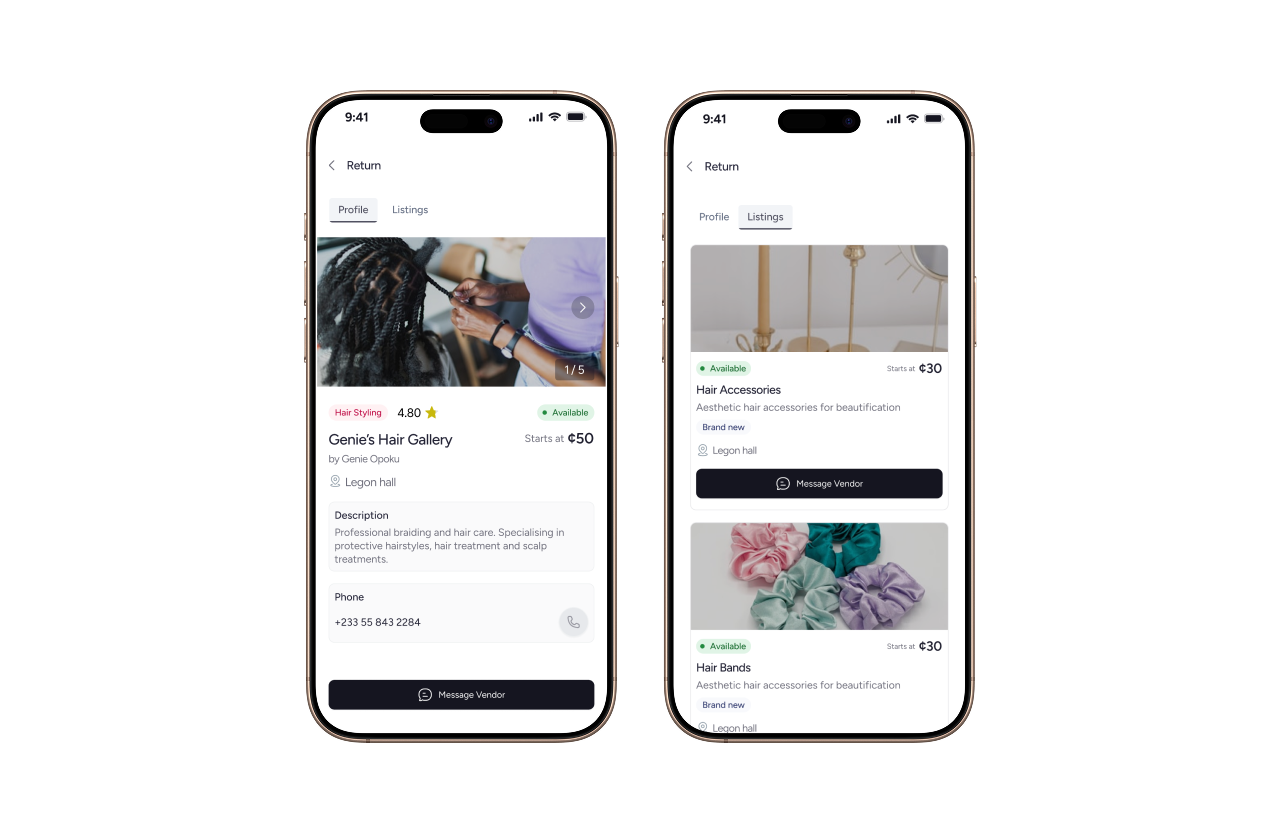
Storefront vetting
Handling Edgecases
A major constraint for the MVP was scaling to different universities without pre-populating every campus database in the region. Blocking users from unlisted campuses would result in high churn and lost data.
I designed an “Escape Hatch” onboarding flow. If a user’s campus wasn’t listed, I integrated a dynamic flow using the Google Maps API (Silent Geocoding). This allows users to type their university name, which we captured to save their location data structurally. This transformed a potential UX dead end into a valuable market research tool.
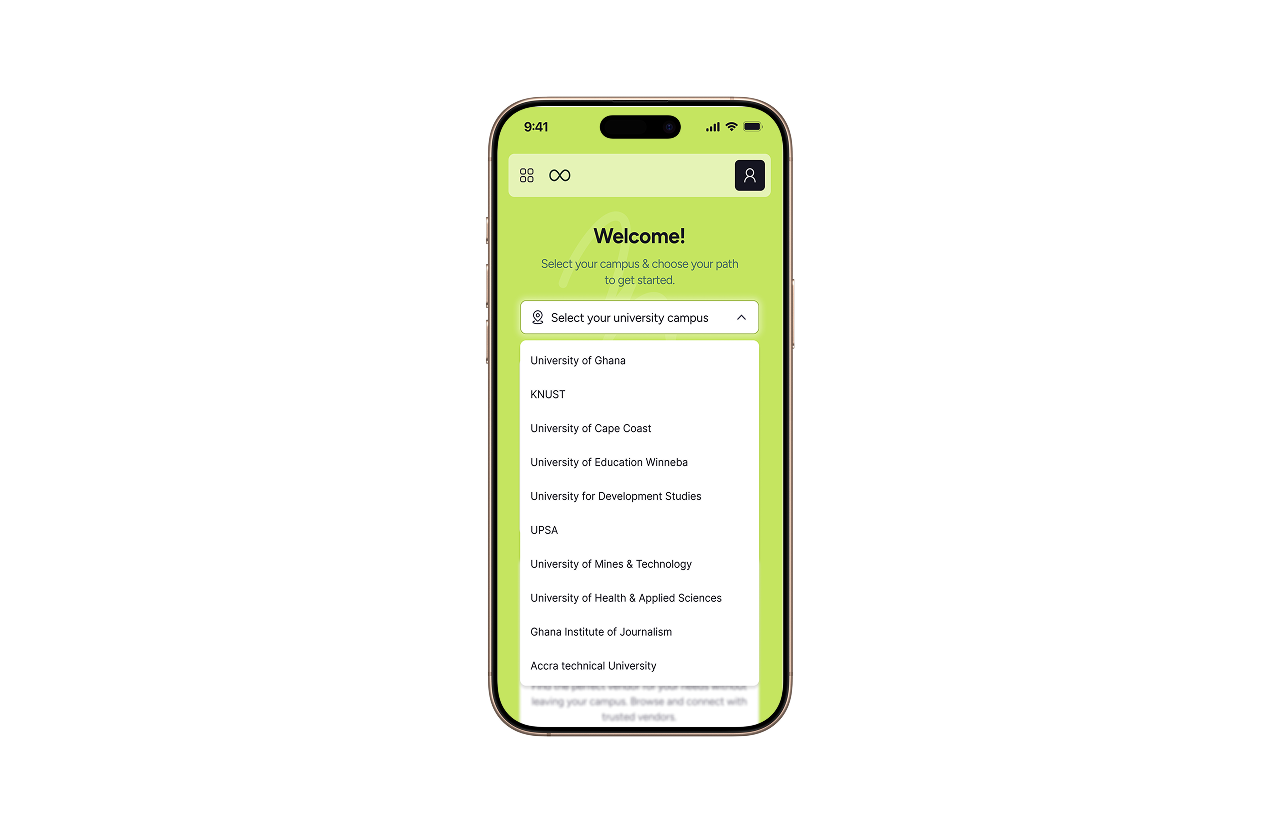
Edge cases
The Impact
Campus Vendor does more than just list services; it respects the intelligence and complexity of the student entrepreneur. By moving from a chaotic social-feed model to a structured, intent-based marketplace, we created a system where discovery is instant, and business management is professional.