
Breadwinner
A subscription-based bread delivery service with a powerful social mission: getting children off the streets of Accra, Ghana, and into schools.
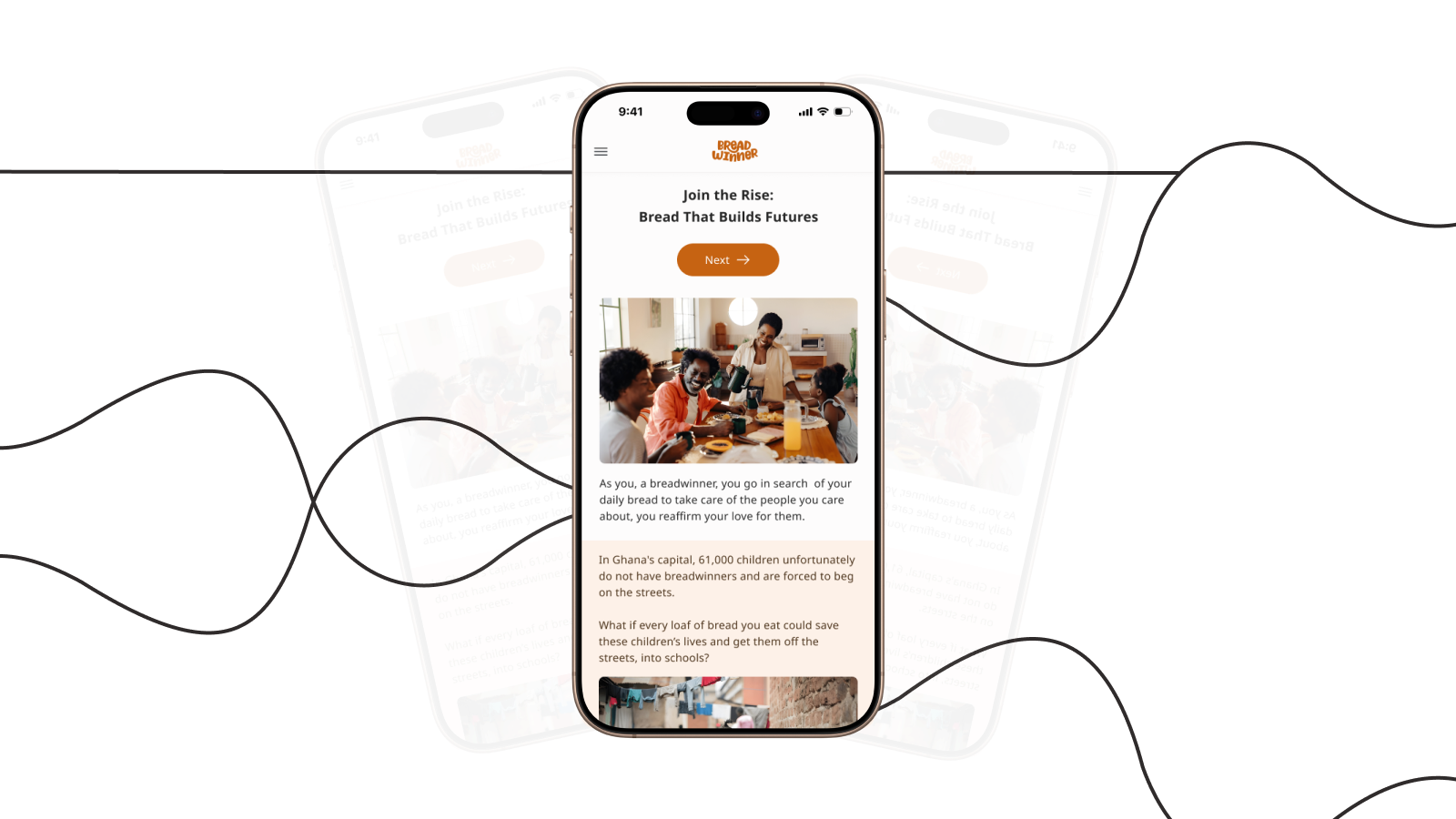
Product Summary
Breadwinner is a subscription-based bread delivery service that transforms a daily office need into sustained social impact. By connecting corporate offices with fresh bread deliveries, the platform generates funding to get street children in Accra, Ghana off the streets and into schools, creating a self-sustaining cycle where convenience meets conscience.
This case study details the design of a dual-sided platform that had to serve both busy professionals seeking hassle-free bread delivery and partner organizations needing transparent impact tracking, all while maintaining the trust required for a subscription model.
The Challenge
In Accra, Ghana, 61,000 children live without breadwinners, forcing them to beg on the streets instead of attending school. Traditional donation models suffer from donor fatigue and lack transparency, while existing food delivery services miss the opportunity for embedded social impact.
The design challenge was clear: how do we create a bread delivery experience so seamless that subscribing becomes easier than forgetting, while maintaining the transparency needed to prove every loaf funds a child’s education?
Understanding the Users
To understand both sides of this marketplace, I conducted a comprehensive research phase:
- Shadowed Street Girls Aid operations for 1 week to understand operational constraints
- Conducted 20 interviews with potential corporate subscribers
- Analyzed 5 competing subscription services (HelloFresh, Blue Apron, local bakeries)
- Surveyed 100 office workers about bread consumption patterns
The research revealed a critical insight: the “guilt tax” problem. Office managers wanted to support social causes, but existing models required them to justify charity spend to finance teams. By framing Breadwinner as a business expense (office supplies) rather than a donation, we removed the friction of approval while maintaining impact.
Key Research Findings:
Subscription Preferences:
- 80% of offices order bread weekly, indicating a habitual, predictable need
- 70% prefer morning deliveries (before 9am), timing is critical
- 85% want variety in bread options, monotony kills subscriptions
Social Impact Requirements:
- 84% more likely to subscribe if they can see transparent impact tracking
- 89% prefer local partnership models over international NGOs
- Trust verification was the #1 barrier to commitment
The Constraint: Partner organizations needed real-time impact dashboards to report to donors, but office managers needed zero-friction ordering. These needs had to coexist in the same system.
Building Trust Through Transparency
The first design principle was radical transparency. Unlike traditional charities where impact feels abstract, I designed the system to show subscribers exactly how their subscription translates to educational support.
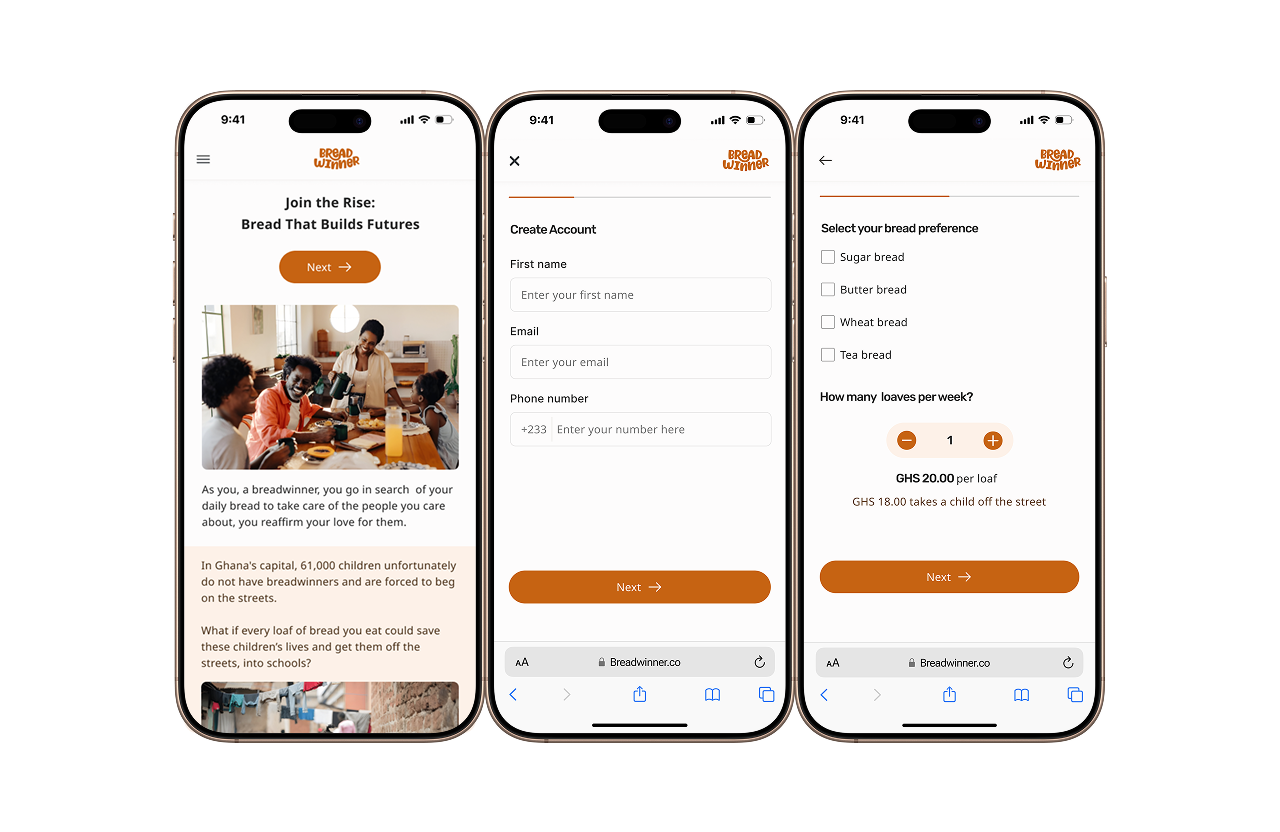
The Design
The dashboard uses a Direct Impact Meter: “Your subscription has funded 3 children for 4 months of schooling.” This quantified impact removes the ambiguity of traditional donations and creates an emotional connection without requiring extra effort from the subscriber.
For partner organizations, I built a separate Impact Analytics Dashboard showing subscriber growth, funding distribution, and beneficiary data, giving them the reporting tools needed for donor transparency without cluttering the customer experience.
Designing for Convenience
The subscription model had to be invisible after setup. I designed a three-click onboarding flow:
- Delivery preferences (day, time, location)
- Bread selection (variety, quantity, dietary restrictions)
- Payment setup (auto-renew with pause options)
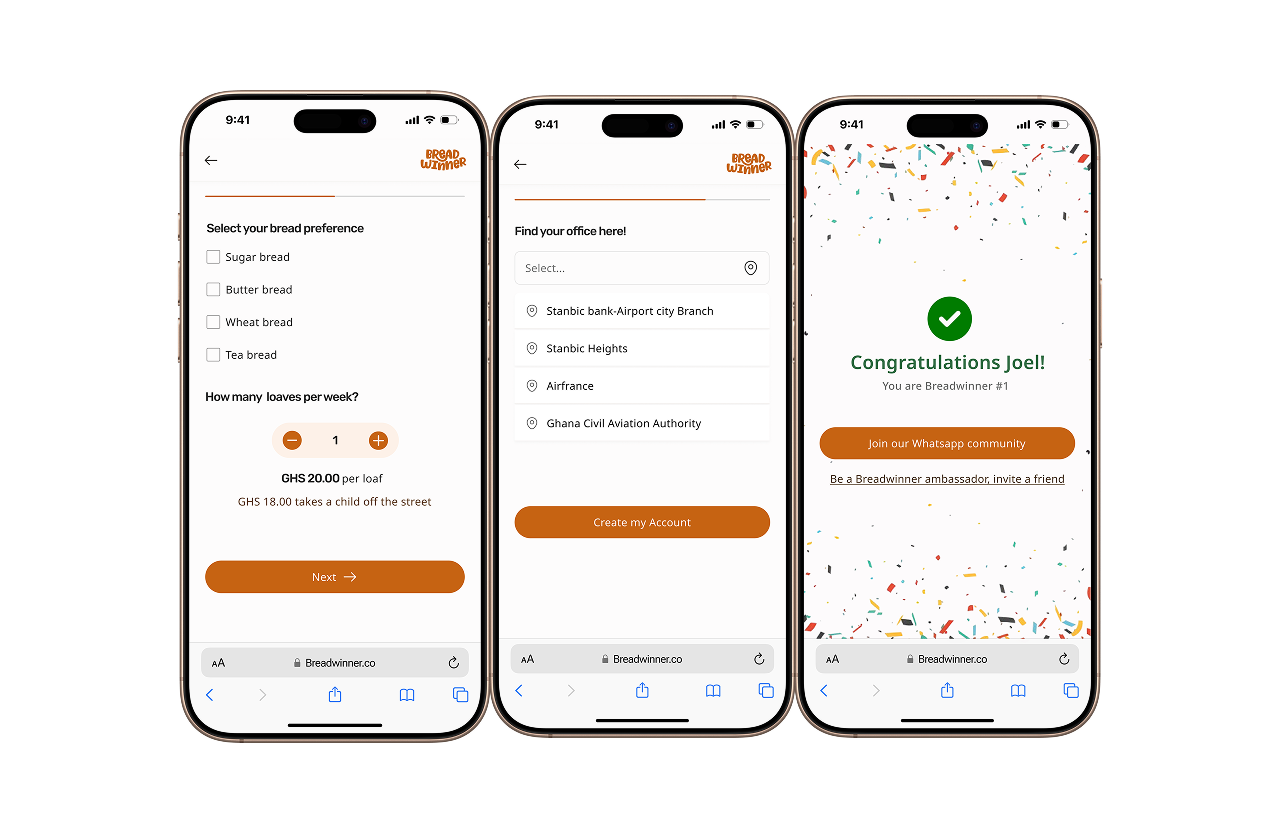
The Design-1
Key Features:
Smart Scheduling: The system defaults to “Every Monday, 8:30am” based on research showing peak office arrival times. Users can override this, but the default eliminates decision fatigue.
Bread Variety Rotation: To combat subscription monotony (the #1 cancellation reason), the system auto-rotates bread types weekly while respecting dietary restrictions. Users can lock favorites or skip weeks.
Community Feed: Subscribers see anonymized updates from Street Girls Aid (photos of children in school, test score improvements, graduation ceremonies), keeping the mission visible without being intrusive.
Pause, Don’t Cancel: Holiday breaks and office closures are common. Instead of canceling, users can pause subscriptions with one tap, reducing churn from temporary disruptions.
The Impact
Breadwinner taught me that social impact design isn’t about making users feel guilty—it’s about removing friction from doing good. By embedding impact into an existing habit (office bread orders), the platform created a sustainable funding model that doesn’t rely on donation fatigue.
The design’s success hinged on understanding that corporate buyers needed to justify the subscription as a business expense, not charity. This reframing, combined with radical transparency and convenience, created a model where impact is the byproduct of convenience, not the burden.